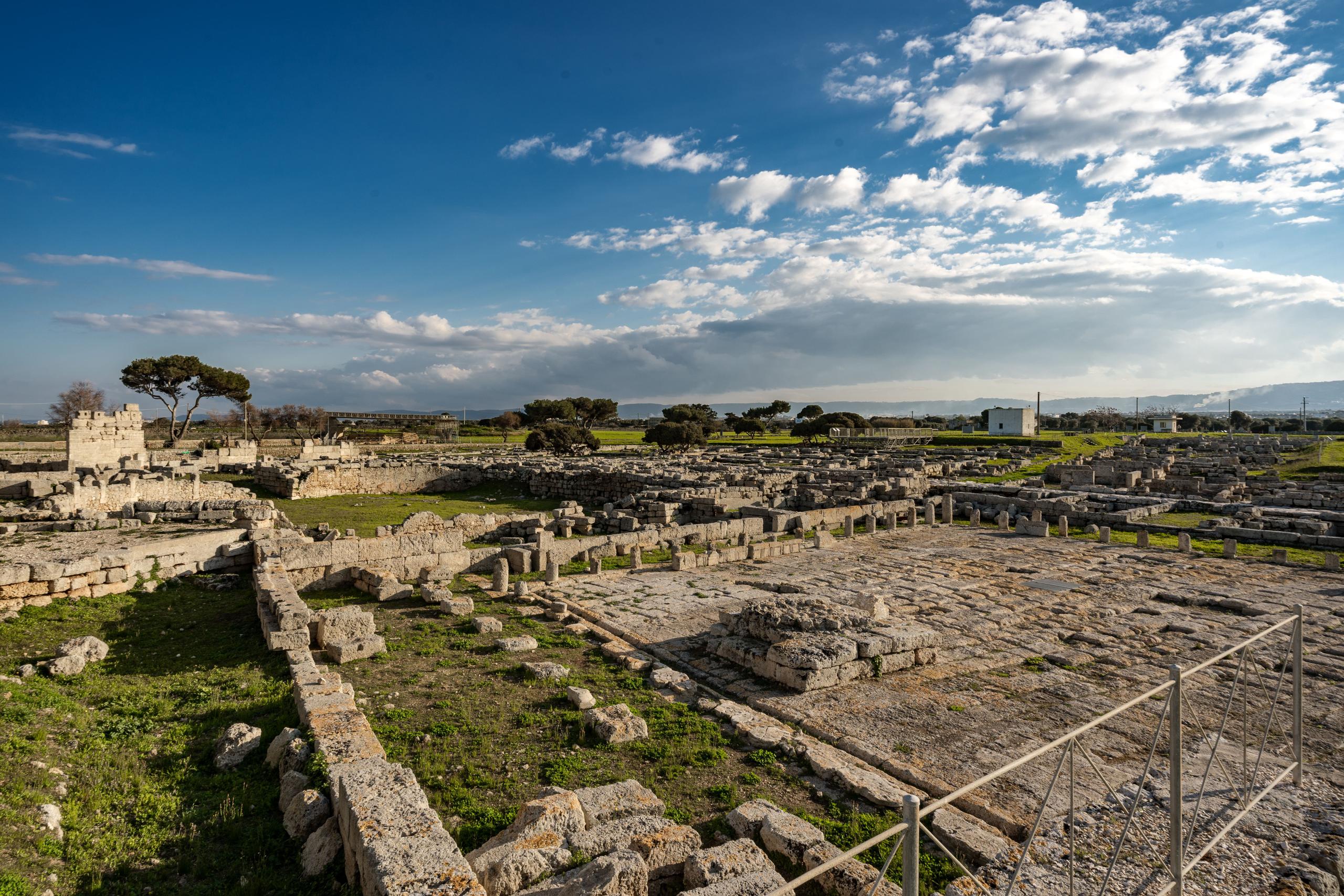
Located along the Adriatic coast of Fasano, the Egnazia Archaeological Park remains a gem worth visiting, rich in history and culture. But what are its origins, and why does it still attract hundreds of tourists today? Let’s find out together!
HISTORY
Originally, the entire area had been inhabited by indigenous peoples as early as the 15th century BCE. Starting in the 11th century BCE, however, it was invaded by the Iapigi, a people of Balkan origin.
Later, from the 8th century BCE through the 3rd century BCE, the city was inhabited by the Messapians. The Messapian period came to an end with the Roman occupation; it is the Romans’ presence that is primarily evident in the remains found at the archaeological site.
In fact, the city was already mentioned by authors such as Pliny and Horace as a hub of trade and commerce thanks to its strategic geographical location, between the port and the Via Traiana.
The port was used primarily to access the Via Egnatia, the ancient road connecting the Adriatic Sea to the Black Sea, built by the proconsul of Macedonia, Gaius Ignatius. It was precisely the presence of this road that prompted the Romans to rename the city accordingly.
WHAT TO EXPECT
In the Egnazia Archaeological Park, you can admire monuments and dwellings from the Roman and Late Antique periods, such as the imposing defensive wall, with its northern section reaching a height of 7 meters. There are also traces of other key structural elements typical of Roman architecture, such as the Forum, the Amphitheater, the Cryptoporticus, and the Kiln. In addition to these, there is a large early Christian complex featuring the Basilica and the Baptistery. Outside the defensive walls, however, lies the Messapian necropolis with pit graves, semi-chamber graves, and chamber graves, some of which are decorated with exquisite frescoes.
Would you like to visit this piece of local history? Contact our Guest Relations Team—we’d be more than happy to provide you with more information and help you plan your visit!